Caravan Lithium Batteries Explained: Benefits, Costs, Lifespan & Choosing the Right Size
October 31, 202616 min read
When camping away from powered sites, a reliable caravan lithium battery can make a significant difference to comfort. Your battery system determines how much electricity you can use without connecting to the mains, from running your fridge overnight to powering lights, pumps, and electronics. If you’re still choosing a van, you can browse Australia‑wide caravan listings.
Lithium batteries have become popular as an alternative to AGM batteries due to their more usable energy, lighter weight, faster charging rate, and longer service life. Choosing the right battery involves more than choosing the highest amp-hour rating.
It explains how caravan lithium batteries work, their advantages and disadvantages, typical Australian prices, expected lifespan, and charging requirements. Also, you can compare common battery sizes to choose a setup that is suitable for your caravan's electrical needs and travel style. If you’re still deciding on a van style, compare hybrid caravans or touring caravan listings.
This type of deep-cycle battery is designed to store electricity for use in a caravan when it is disconnected from external power sources.
Most lithium batteries intended for caravans in Australia use lithium iron phosphate technology, better known as LiFePO4. In addition to its thermal stability, this chemistry is known for its long cycle life and suitability for repeated charging and discharging.
Unlike starter batteries, which deliver a short burst of high current to start an engine, caravan deep-cycle batteries provide power for longer periods of time.
Lithium batteries can power a variety of caravan appliances, including:
● Refrigerators and freezers with 12V power
● Interior and exterior LED lighting
● Pumps for water and ventilation fans
● Charge your phone, laptop, and tablet
● Various types of televisions and entertainment systems — for touring‑friendly infotainment examples see best touring caravans.
● When connected through a suitable inverter, selected 240V appliances will work
The use of lithium batteries with appropriate solar systems makes them particularly advantageous for caravanners who enjoy free camping and off-grid travel. If you plan to tackle rougher tracks, our off‑road caravan hub can help you weigh up setups.
If off‑grid trips are on your radar, start your search close to home.
Lithium batteries have several advantages over traditional lead-acid batteries. Particularly noticeable are these benefits during extended trips or when electricity demand is high.
More Usable Battery Capacity
The ability of lithium batteries to deliver a higher percentage of their rated capacity is one of their biggest advantages.
It is not uncommon for a 100Ah AGM battery to be limited to around 50Ah of usable capacity to help extend its lifespan. The operating life of a comparable 100Ah lithium battery can be between 80 and 90 amp hours under a conservative operating plan, depending on the manufacturer’s recommendations.
A lithium battery can therefore be used for more practical energy storage without necessarily increasing its capacity.
Lower Weight
It is generally true that lithium batteries are lighter than equivalent-capacity AGM batteries.
A typical 100Ah AGM battery might weigh around 25–30kg, while some 100Ah lithium models weigh approximately 10–15kg.
By reducing battery weight, caravan owners can manage their payload limits and free up more space for carrying water, equipment and personal items. Caravan weights explained is vital background reading, and if you’re shopping lighter, see caravans under 2,500kg ATM.
Weight savings vary according to the battery models being compared and whether additional electrical components are required to upgrade.
Faster Charging
Lithium batteries often accept higher charging currents than AGM batteries, especially when they have a high state of charge.
When used with a compatible charger, this can enable you to replenish battery energy more quickly while driving, using solar panels or connecting to the mains electricity.
The charging speed depends on the battery specifications, charger output, temperature, and the available power source.
Longer Potential Lifespan
A lithium battery can withstand substantially more charge-discharge cycles than an AGM battery.
The packaging of some LiFePO4 products advertises several thousand cycles under specified testing conditions. When the battery is installed, charged, and maintained correctly, it can provide a long service life.
Consistent Power Delivery
It is generally observed that lithium batteries maintain a relatively stable output voltage throughout most of the discharge cycle.
The 12V appliances that perform better with a consistent electrical supply can benefit from this.
Battery management systems may disconnect power when the battery reaches its limits, so monitoring the remaining capacity remains critical.
Lithium vs AGM Caravan Batteries: Key Differences
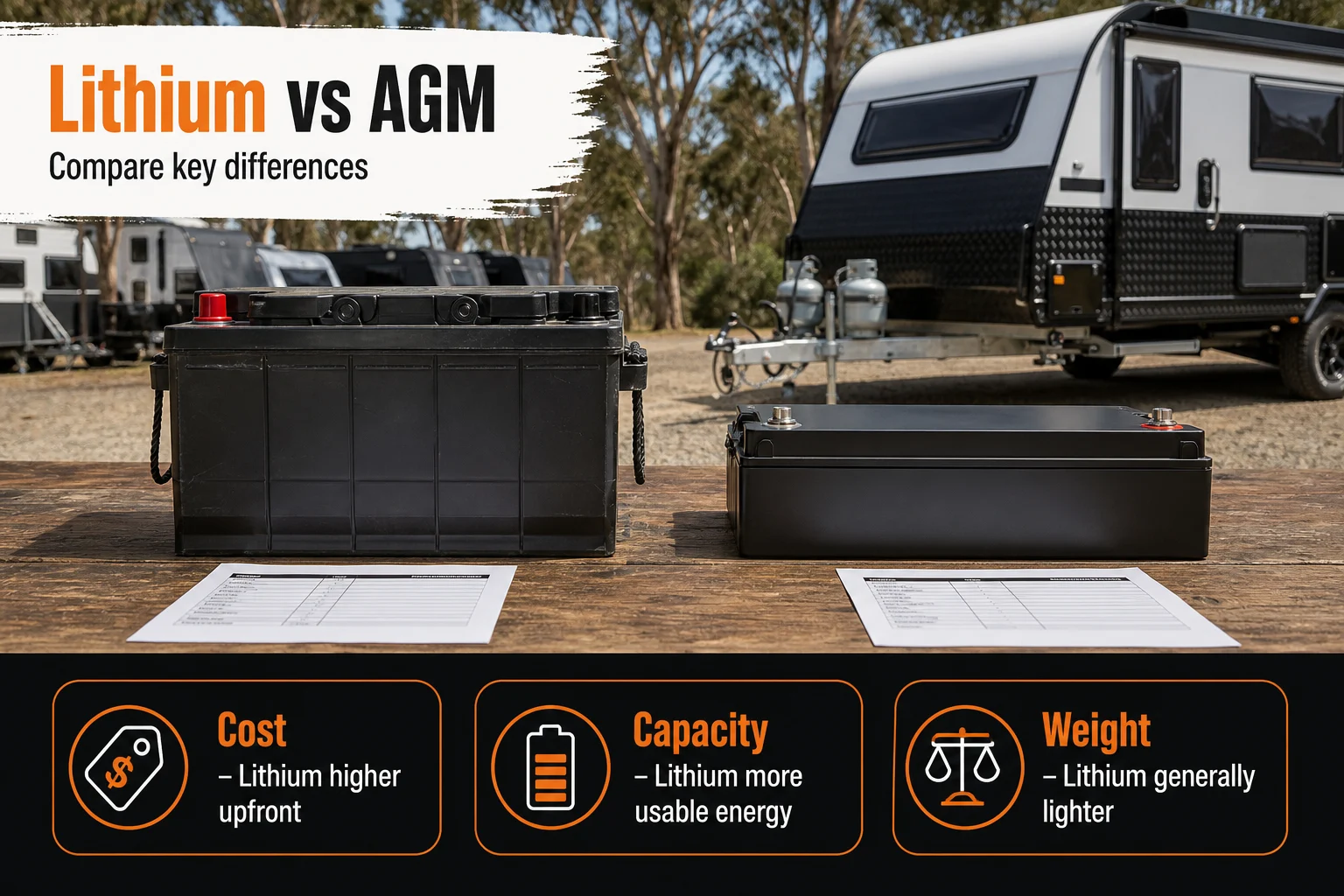
AGM batteries and lithium batteries can both power caravan appliances, but they differ in weight, useable capacity, charging performance, and purchase price.
Feature
Lithium (LiFePO4)
AGM
Initial purchase cost
Higher
Lower
Weight
Generally lighter
Generally heavier
Usable capacity
Often 80–90% or more, subject to specifications
Commonly planned around 50%
Charging
Can accept higher charging currents
Generally slower near full charge
Cycle life
Often several thousand cycles
Commonly several hundred cycles
Voltage during discharge
Relatively stable
Declines more progressively
Charging compatibility
Requires lithium-compatible charging
Requires suitable lead-acid charging
Best suited to
Regular off-grid use and higher energy demand
Budget-conscious or occasional touring
In addition to caravan owners who mainly stay at powered caravan parks and rarely use their batteries, AGM batteries can still be a good choice.
A lithium battery becomes more attractive when weight savings, frequent deep cycling, and extended off-grid capability are considered. If that’s your plan, you can browse off‑road caravan listings to find models built for remote travel.
Choosing the Right Lithium Battery Size for Your Caravan
Choosing the right battery size depends on your daily electricity consumption, how long you want to go camping without charging, and what appliances you plan on using.
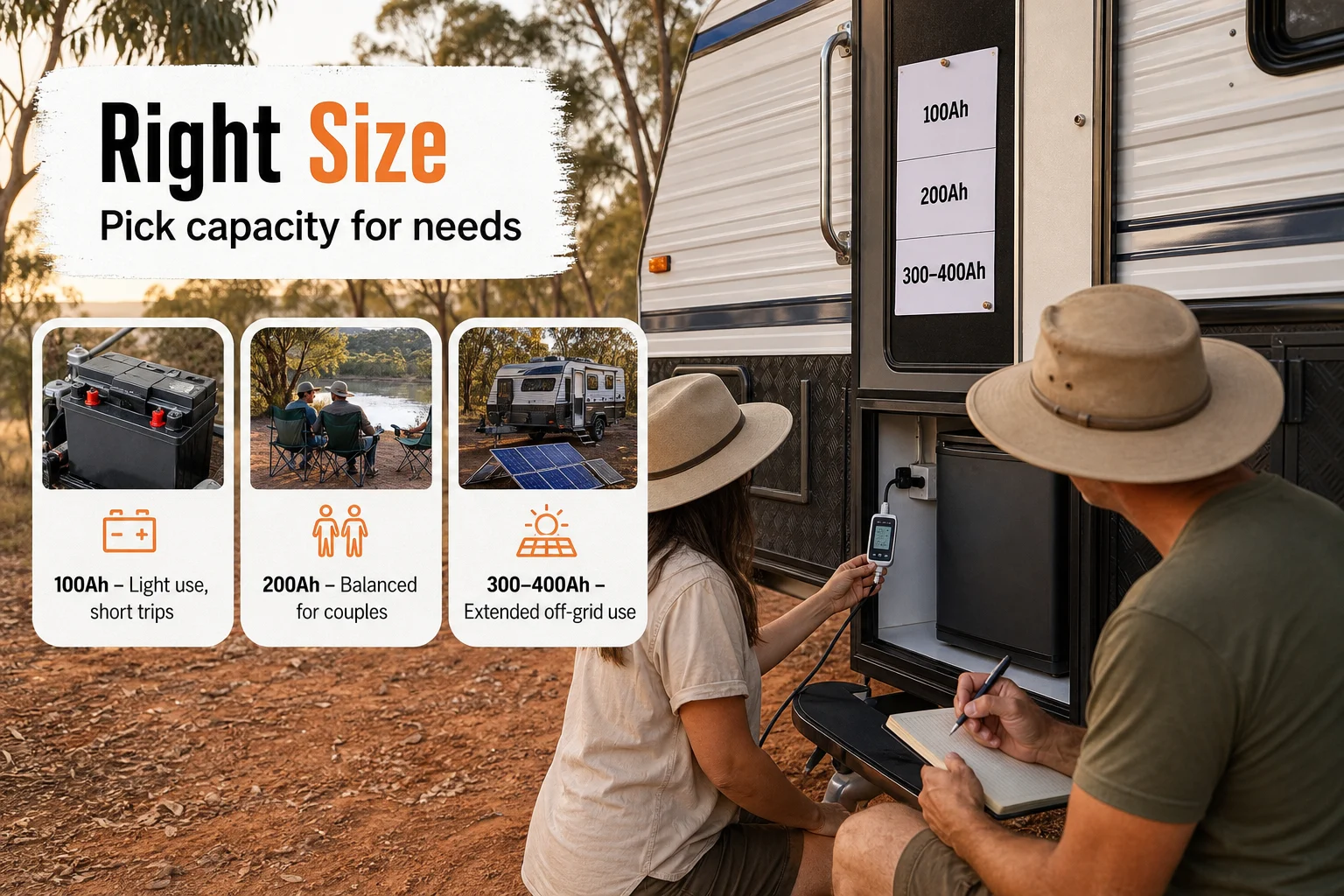
The most common caravan lithium battery capacities are 100Ah, 200Ah, 300Ah, and 400Ah.
Caravan Lithium Battery Size Comparison
Battery Capacity
Nominal Energy at 12.8V
Typical Suitability
100Ah
1,280Wh
Light electrical use and short trips
200Ah
2,560Wh
Couples and moderate off-grid camping
300Ah
3,840Wh
Extended stays and higher daily demand
400Ah
5,120Wh
Larger off-grid systems and heavy electrical use
It is important to note that these are nominal energy figures, not guaranteed usable energy figures. Batteries’ actual capacity depends on their specifications, operating limits, temperature, and system losses.
100Ah Lithium Battery: Best for Light Power Needs
A 100AH lithium battery can be useful for caravanners who use relatively little electricity and recharge their batteries on a regular basis.
Depending on daily consumption, it may be sufficient for LED lighting, phone charging, a water pump, and a modest 12V fridge.
Travelers who frequently utilize powered sites or take short weekend trips can find 100Ah to be a practical starting point—especially in compact options like pop‑top caravans.
Running a fridge continuously may consume a significant portion of the available energy during hot weather.
200Ah Lithium Battery: A Balanced Option for Couples
The 200Ah lithium battery provides more flexibility for couples who enjoy free camping and want to run several appliances at once.
Providing total energy consumption remains within the system’s capabilities, it can support a 12V fridge, lighting, water pump, device charging, and entertainment equipment. For inspiration, see our picks of off‑road caravans for couples.
An appropriate solar charger could make a 200Ah battery a useful balance between storage capacity, cost, and weight.
In many moderate off-grid situations, this is a sensible capacity to assess first.
300Ah Lithium Battery: Suitable for Extended Off-Grid Travel
For travellers who spend long periods away from powered caravan parks, a 300Ah lithium battery provides greater energy reserves.
Additionally, the additional capacity can support larger refrigerators, multiple devices, entertainment equipment, and occasional inverter use.
During cloudy weather, when solar generation is reduced, it can also serve as a buffer. Before you invest, review the key features of good off‑grid caravans so your battery pairs with the right platform.
The larger battery, however, still needs adequate charging capacity. Battery storage without improved solar or other charging sources may simply result in longer recharge times.
400Ah Lithium Battery: For Higher Power Demand
A caravan with substantial electrical needs is generally better suited to a system powered by a 400Ah lithium battery system.
It may be appropriate for travelers using multiple appliances, large inverters, or energy-intensive equipment. If you’re planning a bigger rig, you’ll often see higher-capacity systems in family caravan listings.
Nonetheless, battery capacity alone does not determine whether high-power appliances will operate. If you’re targeting premium comfort with higher loads, explore luxury caravans to see how electrical systems are packaged.
To run an air conditioner, for example, you need a sufficient inverter output, battery discharge capability, suitable wiring, and enough stored energy. A substantial amount of solar input or alternative charging sources may also be required for some systems.
Calculating Your Caravan Battery Requirements
It is most reliable to choose a lithium battery based on your expected daily electricity consumption. If you’re still shopping, our caravan buying checklist can help you assess electrical needs alongside other essentials.
Assess the power rating of each appliance and how many hours it operates per day.
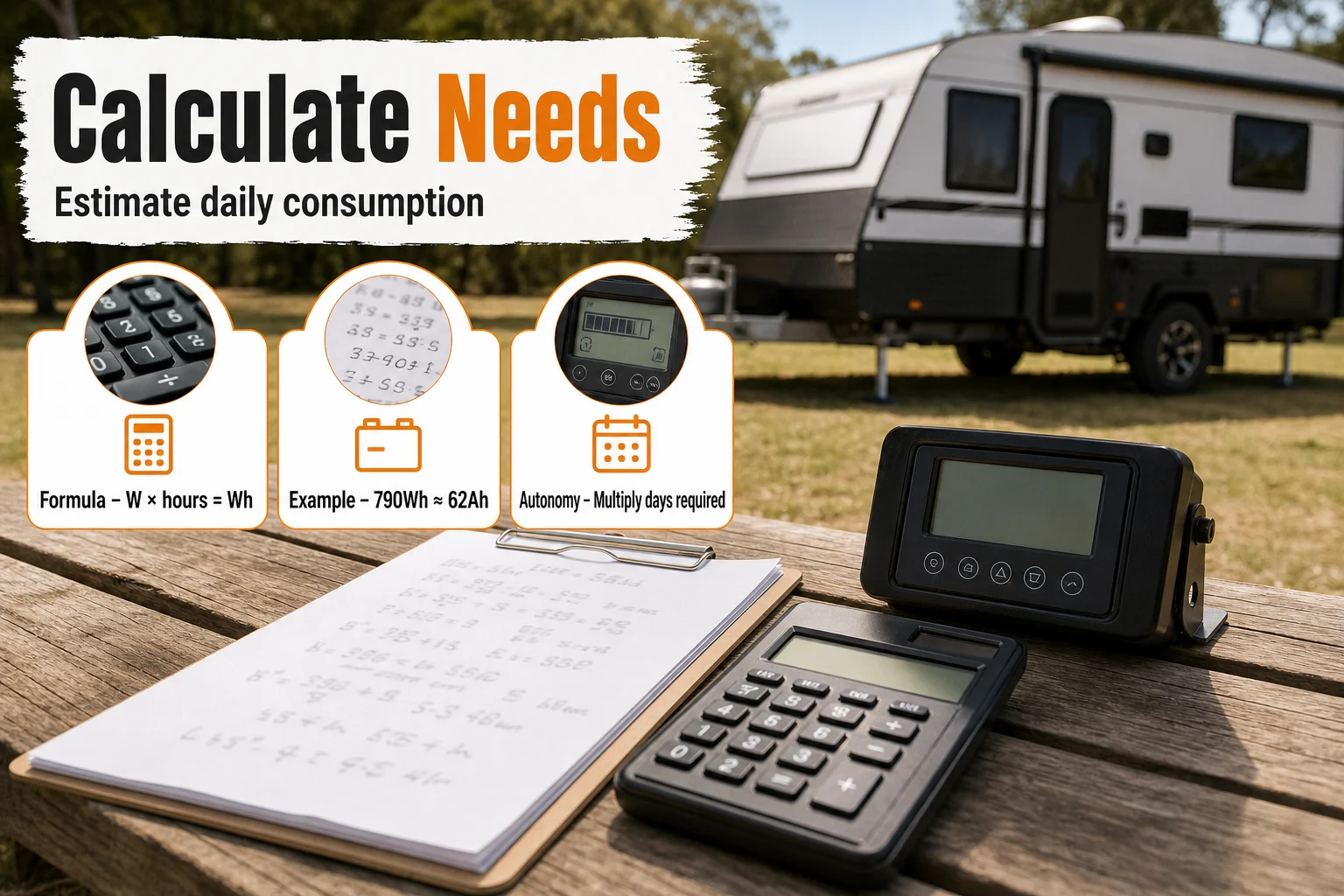
Here is the basic calculation:
Combined daily energy consumption (Wh) = Appliance power (W) × Operating hours
For example:
Appliance
Example Daily Energy Use
12V fridge
500Wh
LED lighting
60Wh
Water pump
30Wh
Phone and device charging
80Wh
Television
120Wh
Total
790Wh
These figures are meant to serve as illustrations. Consumption depends on the equipment, ambient temperature, and usage patterns.
At 12.8V, a daily requirement of 790Wh is approximately 62Ah.
The following steps can be taken if you want two days of battery autonomy without recharging:
790Wh multiplied by 2 equals 1,580Wh
Aiming for 90% usable capacity:
1,580Wh ÷ 0.90 = approximately 1,756Wh of nominal battery capacity.
By multiplying this by 12.8V, we get approximately 137Ah.
For this example, a 200Ah lithium battery would provide a reasonable capacity margin, although additional allowances may be required for system losses, battery aging, and unexpected electricity demands.
It is important to keep in mind that conversion losses will increase the amount of energy drawn from the battery in caravans with an inverter.
Caravan Lithium Battery Costs in Australia
A caravan lithium battery’s price can vary greatly depending on its capacity, manufacturer, battery management features, warranty, and construction.
Batteries with lower prices may offer basic functionality, while premium models may offer Bluetooth monitoring, advanced protection systems, and stronger discharge ratings.
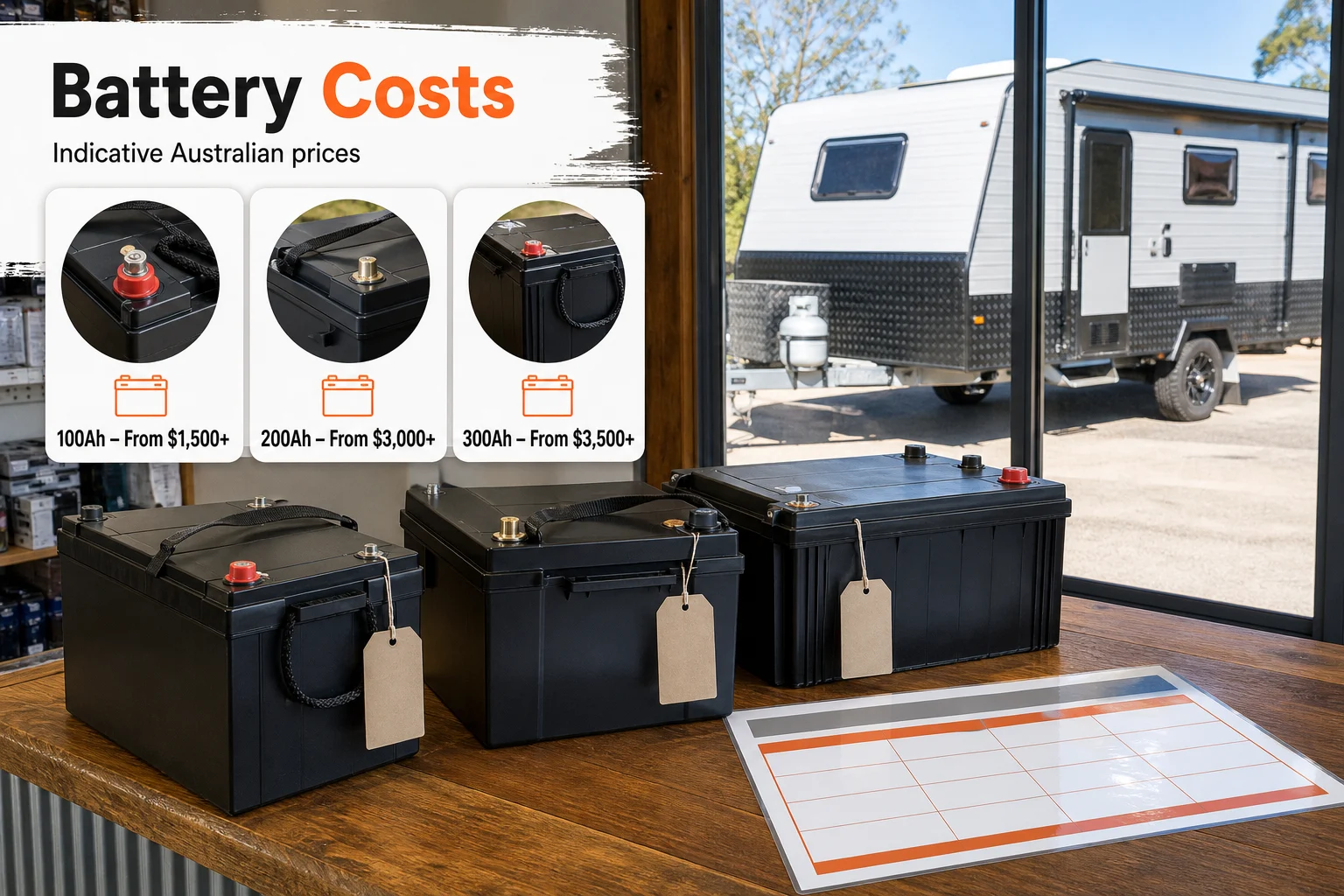
Based on examples advertised by Australian retailers, here are some broad indicative battery-only price ranges in Australian dollars.
Battery Capacity
Indicative Battery Price (AUD)
100Ah
1,500+
200Ah
3,000+
300Ah
3,500+
400Ah
6,500+
Ranges are not quotations and may change with retailer promotions, specifications, and availability. There are additional expenses associated with installation, charging equipment, and accessories.
Additional Lithium Battery Installation Costs
The process of upgrading from AGM to lithium may require more than just replacing the battery.
Depending on the existing electrical system, additional equipment could include a lithium-compatible DC-DC charger, solar charge controller, mains charger, battery monitor, protective fuses, cables, and mounting hardware.
While some caravan owners can reuse compatible parts, others may require a more substantial electrical upgrade.
Before recommending changes, a qualified installer should assess the entire system.
Caravan Lithium Battery Lifespan
The lifespan of a caravan lithium battery is typically measured in charge-discharge cycles as well as in calendar years.
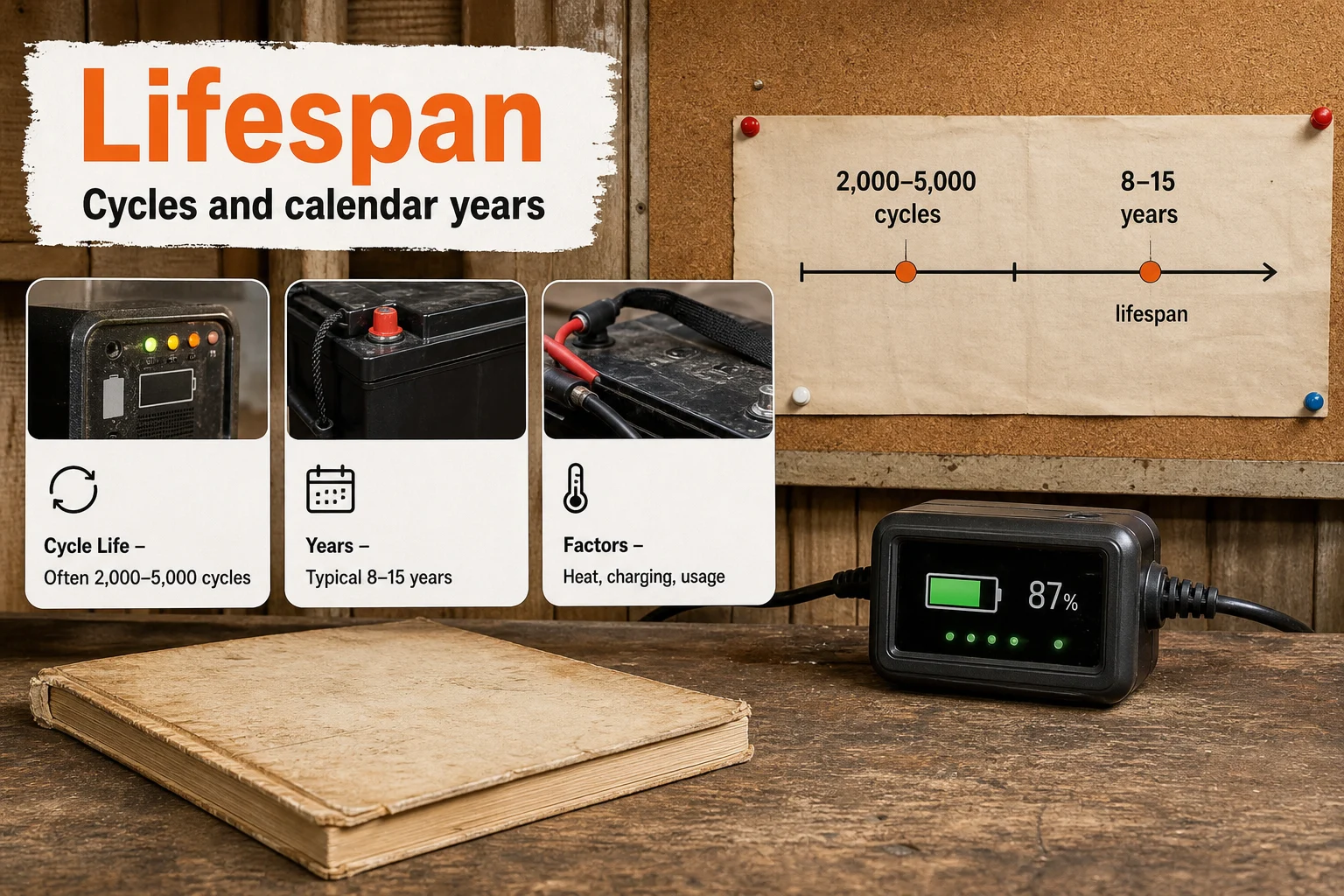
There are numerous quality LiFePO4 batteries on the market with cycle life ratings of 2,000–5,000 cycles or more, depending on the manufacturer and testing conditions.
Having a cycle-life rating does not necessarily mean the battery will stop working after that number of cycles. In common usage, it refers to the point at which remaining capacity falls to a specific percentage.
As an example, a battery manufacturer may rate it for a certain number of cycles before it loses 80% of its capacity.
In practical caravan use, a well-maintained lithium battery may last roughly 8–15 years, but this cannot be guaranteed. Product quality, usage frequency, operating temperature, and charging practices all influence its lifespan.
Factors That Affect Lithium Battery Lifespan
In addition, battery degradation can be speeded up by high temperatures, repeated operation outside recommended limits, and improper charging settings.
It is also possible that frequent deep discharges may reduce battery lifespan, depending on the design of the battery.
You should carefully follow the manufacturer’s charging instructions, protect the battery from excessive heat, and monitor its state of charge in order to increase its service life. A practical caravan maintenance checklist can help you stay on top of routine checks.
When storing the battery for an extended period, follow the recommended storage charge level rather than assuming that the battery should remain at 100% at all times.
Charging Methods for Caravan Lithium Batteries
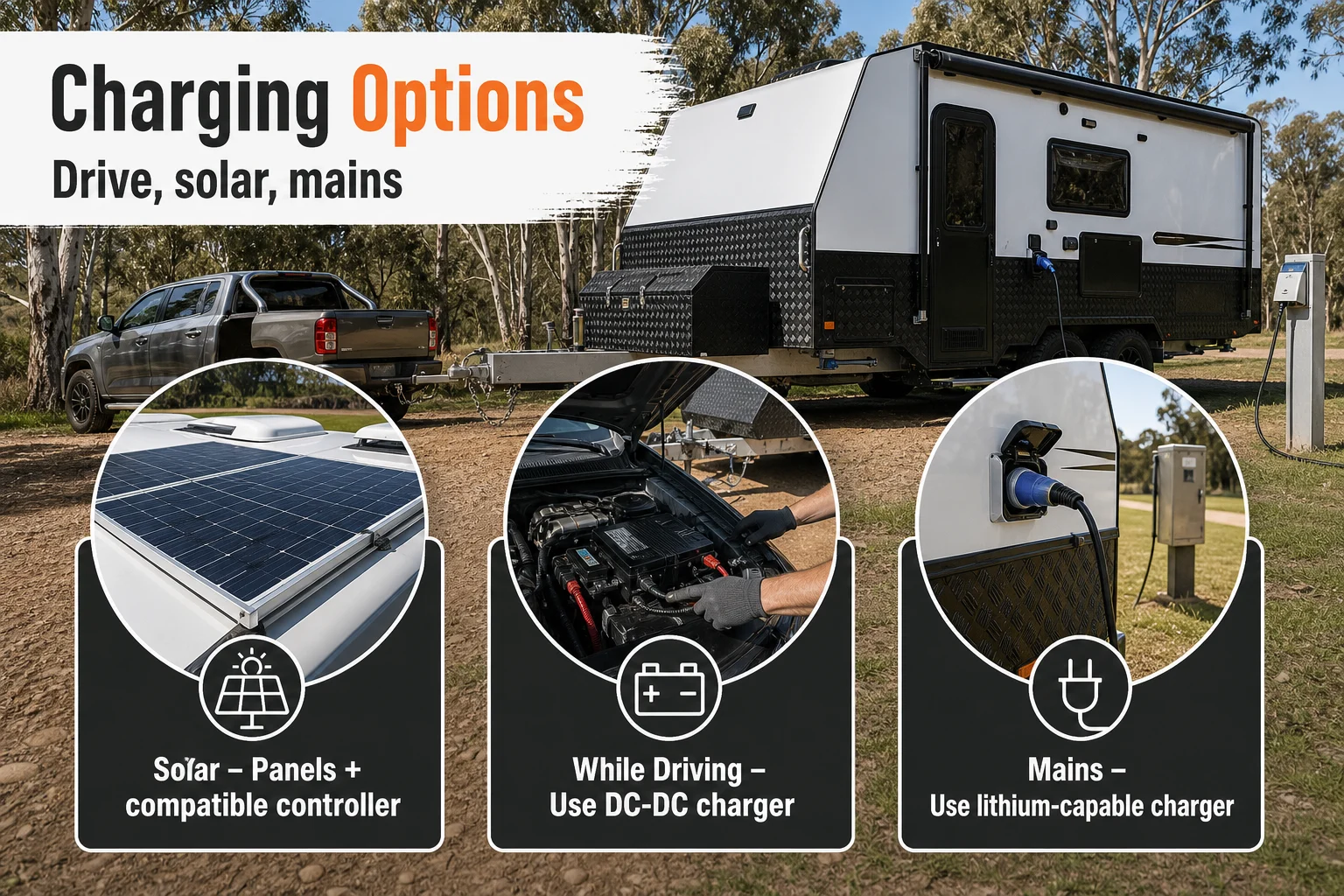
A caravan lithium battery can be charged from several sources, provided the equipment is compatible with the battery’s specifications.
Charging While Driving
A DC-DC charger can regulate how much power is supplied to the caravan’s auxiliary battery from the tow vehicle.
When the towing vehicle uses a smart alternator or when a controlled lithium charging profile is needed, this is particularly useful. If you’re new to power on tow, read caravan towing for beginners for safe alternator and wiring basics.
A charger must be rated appropriately for the battery and electrical installation.
Charging With Solar Panels
When camping away from powered sites, solar panels are a popular option for recharging lithium batteries.
A compatible solar charge controller regulates how much electricity is delivered from the panels to the battery.
The performance of a solar panel depends on its wattage, sunlight hours, shading, temperature, and installation efficiency.
As an example, a 400W solar array receiving four equivalent peak-sun hours could theoretically generate 1,600Wh before losses. Battery energy delivered to the battery will generally be lower than what is actually delivered.
The connection of solar panels to batteries should be avoided without the appropriate charge-control equipment.
Charging From Mains Power
In a powered caravan park or while charging at home, a suitable mains battery charger can replenish the lithium battery.
Chargers must support the battery’s charging profile.
The use of lithium technology with an older AGM charger should not be assumed automatically.
There are some existing chargers that support selectable lithium modes, and there are others that require replacement.
Upgrading from AGM to Lithium Caravan Batteries
Replacement of an AGM battery with a lithium battery is possible in many caravans, but it should not be treated as a straightforward task without checking the electrical system first. If you decide a different van suits your electrical plans, you can list it through our sell my caravan page.
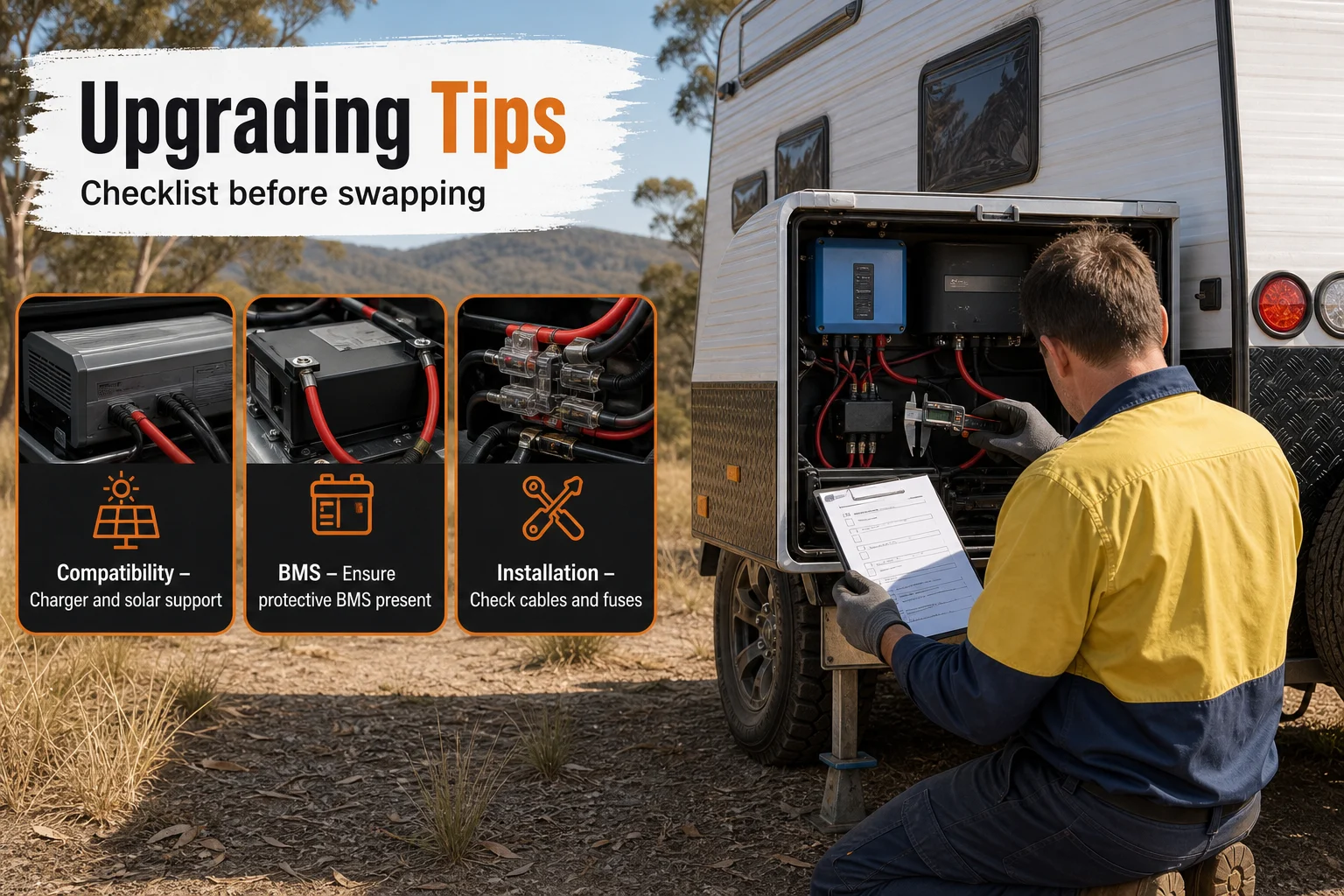
Consider the following before upgrading:
● Confirm that the mains charger, DC-DC charger, and solar controller support the chosen lithium battery.
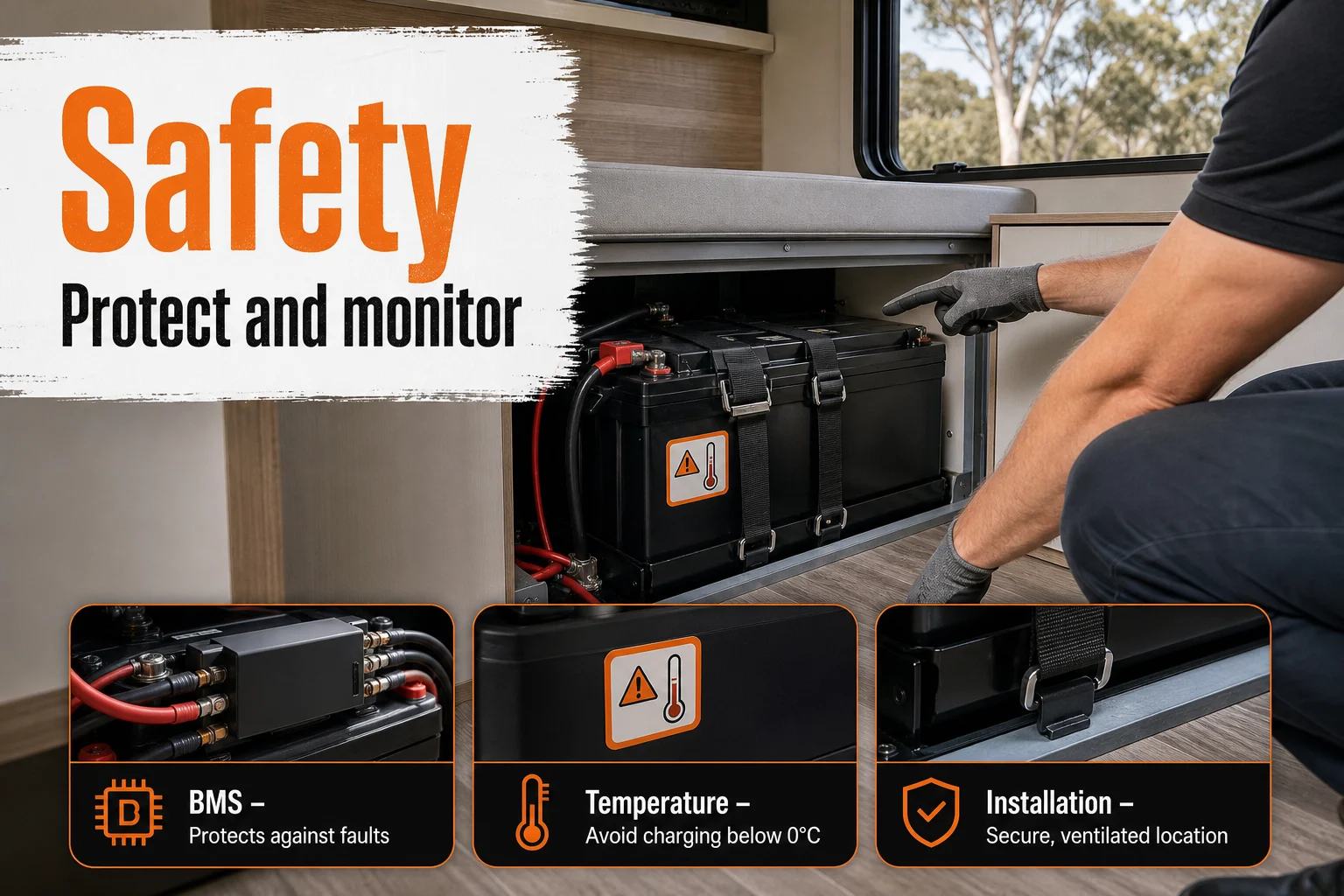
● Battery management system: Choose a battery with a BMS that protects against overcharging, excessive discharge, overcurrent, and unsafe temperatures.
● In the physical installation process, check the battery dimensions, mounting and ventilation requirements, as well as the protection from moisture and heat.
● Make sure cables, fuses, and other electrical components are rated for the expected charging and discharge currents.
● Monitoring: Use a suitable battery monitor to track remaining capacity and avoid unexpected shutdowns.
Australian recreational vehicle electrical installations must also meet applicable safety requirements, including AS/NZS 3001.2:2022. A qualified installer should assess lithium battery location, monitoring, and protection requirements.
Caravan Lithium Battery Safety
Lithium iron phosphate batteries are generally considered relatively stable lithium battery chemistry when operated within their specified limits.
There is, however, no battery system that is completely risk-free.
The incorrect charging of batteries, damaged wiring, poor installation, unsuitable mounting and excessive temperatures can pose electrical and safety hazards.
There should be clear installation instructions and an appropriate battery management system included with a quality caravan lithium battery.
Battery owners should also pay attention to the battery’s operating temperature range. Standard LiFePO4 batteries must not be charged below 0°C unless they are specifically designed with low-temperature charging protection.
In alpine areas or when camping in cold conditions, this is an important consideration for Australian travellers.
Value and Cost-Effectiveness of Caravan Lithium Batteries
Whether lithium is worth the extra expense depends largely on how frequently you use your caravan and how much electricity you use.
In the case of occasional travellers who mostly stay in powered caravan parks, an existing AGM system may be sufficient.
Touring on powered sites most weekends? Keep things simple and browse by location.
However, lithium batteries can offer significant advantages to travellers who regularly camp off-grid, want to reduce caravan weight, or rely on electrical appliances all the time—especially for lightweight off‑road caravans where every kilo counts.
While lithium batteries generally cost more initially, their greater usable capacity and longer cycle life may improve their value over time.
The best battery is not necessarily the most expensive. The caravan battery meets your electricity needs while working safely with your caravan's charging system.
Key Factors to Consider When Choosing a Caravan Lithium Battery
Think about your travel habits and existing caravan electrical setup before buying a lithium battery.
It is a good idea to calculate your daily power consumption, decide how many days you want to camp without charging, and check whether your solar or vehicle charging system can replenish that power.
Compare battery capacity, usable energy, continuous discharge rating, battery weight, dimensions, warranty, and BMS features next.
For travellers with modest power needs, a 100Ah system may suffice. The 200Ah battery provides additional flexibility, while the 300Ah and 400Ah battery systems are more appropriate in cases of high electricity demand. Make sure the battery's battery management system (BMS) discharge limits match up with the continuous and surge power requirements of an inverter that you plan to run. If keeping weight down is a priority, compare the best lightweight caravans.
Make sure the battery's battery management system (BMS) discharge limits match up with the continuous and surge power requirements of an inverter that you plan to run.
Rather than focusing solely on the battery price, consider the overall cost of the system.
Final Thoughts
The upgrade to a caravan lithium battery can benefit travellers in search of lighter equipment, greater usable energy, and improved off-grid capabilities. If you’re still deciding on a rig, you can browse new and used caravans or narrow your search to off‑road caravans in Victoria.
How much electricity you consume, how often you recharge, and whether your caravan already has compatible charging equipment determine the right charging capacity.
100Ah batteries are suitable for light touring, while 200Ah batteries provide a useful balance for many couples. Larger 300Ah and 400Ah systems are designed to provide additional storage for extended off-grid travel and more demanding electrical setups. For layout ideas, see our picks of caravans for couples.
You should compare the cost of the entire installation, check the battery and charger compatibility, and calculate your expected daily energy consumption before investing. Shopping locally? Start with listings in New South Wales, Western Australia or Tasmania.
It's important to choose a correctly sized, professionally installed battery system to make your caravan more practical and comfortable for future trips.
Share this article
Frequently asked questions (FAQs)
Ready to Find Your Dream Caravan?
Explore thousands of caravans for sale across Australia and start your journey in style.
Looking to buy? Browse caravans for sale from dealers and private sellers across Australia, with listings available by make, model, price, location and caravan type.
Ready to sell? Visit Sell My Caravan to advertise your caravan for just $49 incl. GST. Your listing stays live until sold, helping you connect with potential caravan buyers across Australia.
Explore Other Travel Options
Still deciding which travel setup suits you? Browse motorhomes for sale for a vehicle with integrated living space, or explore campervans for sale for a more compact option. For a towable camping setup, compare camper trailers for sale across our other marketplaces.
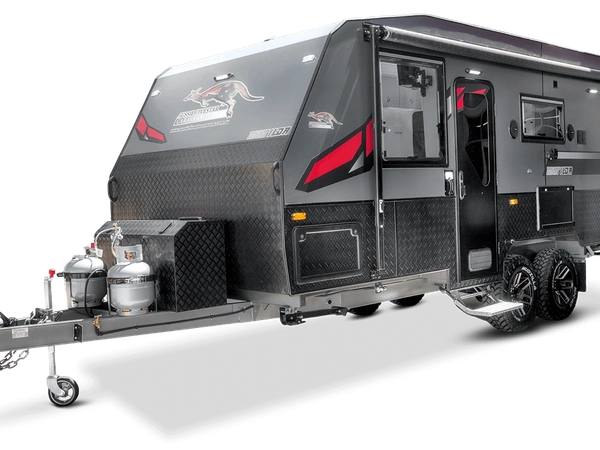
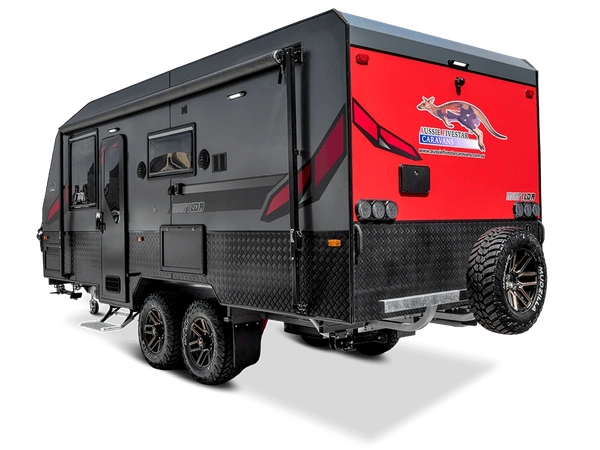
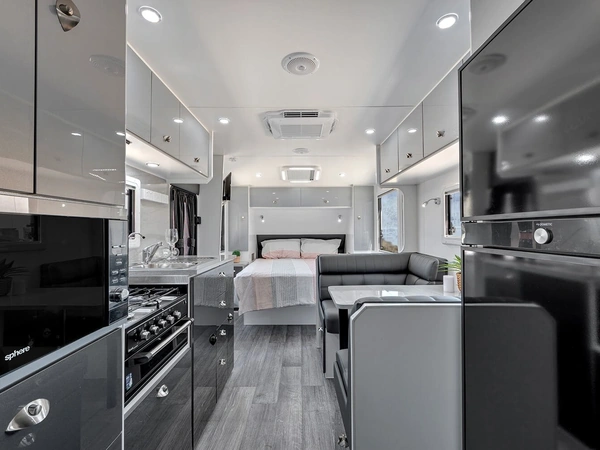
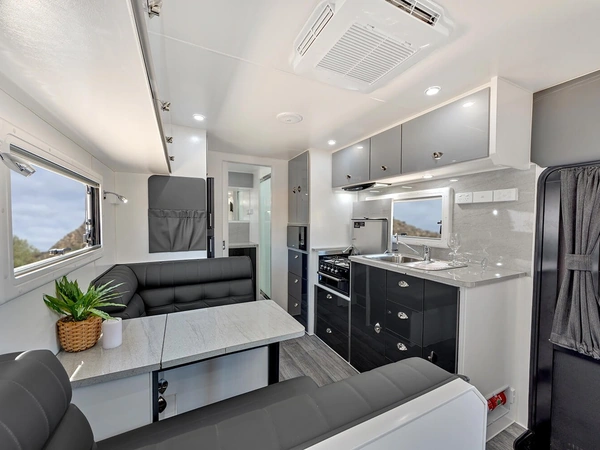
 Off Road Caravan
 18.5 ft (5.6m)
 3,500 Kg