Caravan Towing for Beginners: Essential Tips for Australian Drivers
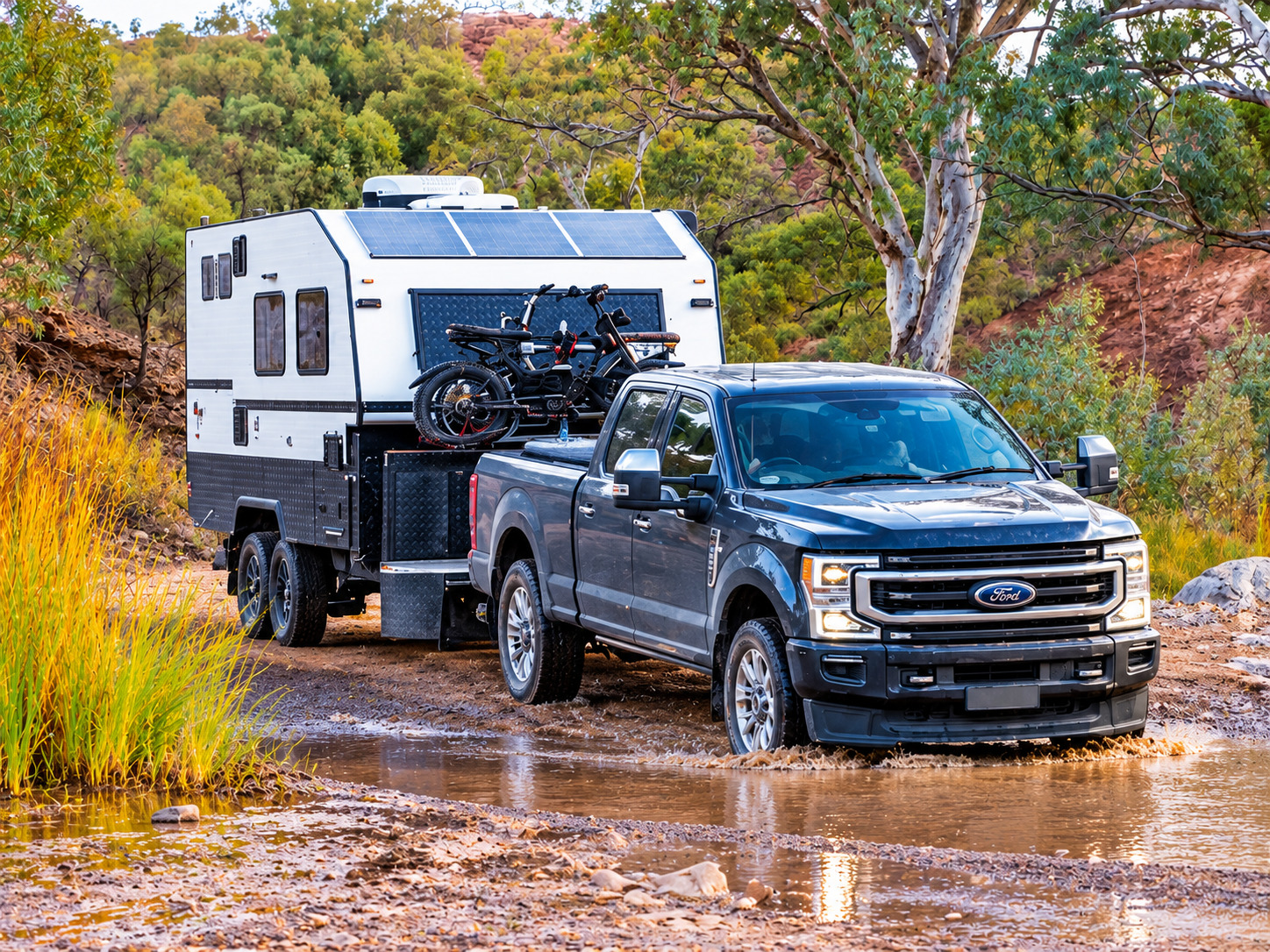
If you are towing a caravan for the first time, it can feel like a big step.You’re not just driving bigger vehicles, you’re also managing extra weight, a longer stopping distance, and a trailer that responds differently to steering, braking, and wind.
The good news is you can learn the skill of caravan towing.A suitable tow vehicle, the right equipment, and some practice can help you travel safely.
This beginner’s guide will explain how to prepare your vehicle and caravan, hitch up and manage common driving situations, as well as complete essential checks before driving on Australian roads.Check the weight of buying new caravans and your vehicle’s towing capacity if you’re still choosing a caravan.
What Beginners Should Know Before Towing a Caravan
It is important to understand how towing a caravan differs from everyday driving before you start.
A caravan affects the acceleration, braking, steering, and visibility of your vehicle.You will need more space when turning, more time when overtaking, and a greater stopping distance.
How towing changes driving and handling
The main differences include:
- Acceleration is slower: The additional weight makes it more difficult to build speed, particularly when joining traffic or climbing hills.
- Having a loaded caravan adds significant weight to the combination, so you need more space to brake safely.
- Wider turns: The caravan’s wheels follow a different path from the tow vehicle’s wheels and may cross inside corners.
- Depending on the caravan’s width, ordinary vehicle mirrors may not be able to provide a satisfactory view behind the combination.
- A greater sensitivity to conditions: Crosswinds, uneven roads, and passing heavy vehicles may affect stability.
If you have never towed before, practice somewhere quiet before taking a long trip.Start with straightforward manoeuvres, gentle turns, and controlled stops.
The professional towing lesson can also help you better understand how the vehicle and caravan work together.The caravan camping guide covers other essential preparations.
How to Check Your Vehicle’s Towing Capacity
Making sure your vehicle can legally and safely tow a caravan is one of the most important steps before towing.
Your tow vehicle, towbar, coupling, and caravan each have a rated limit.A combination must remain within all applicable limits, and not just the vehicle’s maximum towing capacity.
Braked and unbraked towing limits
Manufacturers commonly specify two towing capacities:
In general, manufacturers specify two towing capacities:With a suitable braking system, trailers with a braked towing capacity can tow the maximum trailer mass allowed by the vehicle manufacturer.
The unbraked towing capacity is the capacity when the trailer does not have its own brakes.Generally, this limit is much lower.
As a result of their weight, most touring caravans require a braking system.
Check the owner’s manual, the towbar’s rating, and the caravan’s compliance information before deciding whether the combination is suitable.Browse our guide to caravan towing vehicles to compare your options if you have not yet chosen a tow vehicle.
ATM, GCM and towball download: a quick overview
Additionally, you’ll encounter several weight terms:
- An ATM is the maximum permitted mass of the loaded caravan when it is not coupled to the tow vehicle.
- Gross Trailer Mass (GTM): The weight carried by the caravan’s wheels when coupled to the tow vehicle.
- A tow vehicle’s GVM (Gross Vehicle Mass) is its maximum permitted loaded mass.
- In cases where the manufacturer specifies it, the GCM (Gross Combination Mass) is the combined weight of the loaded tow vehicle and trailer.
- The downward load the caravan places on the towing vehicle through the coupling is known as the towball download.
A passenger’s luggage, accessories, water, and other supplies will all affect the actual weight of the load.
You shouldn’t assume that a caravan is suitable because its ATM is below your vehicle’s advertised towing capacity.The loaded combination must also meet the relevant vehicle, axle, towbar, and coupling limits.For narrowing your search by ATM, caravans under 2,500 ATM are a good place to start, but always check the actual weight loaded and payload before purchasing.
Please refer to our separate guide Caravan Weights Explained for detailed explanations and weight calculations.Detailed requirements for trailer construction and mass-rating can be found in the Australian Government’s Vehicle Standards Bulletin 1.Research caravans under 2,000kg for examples when a lighter towing setup is important.
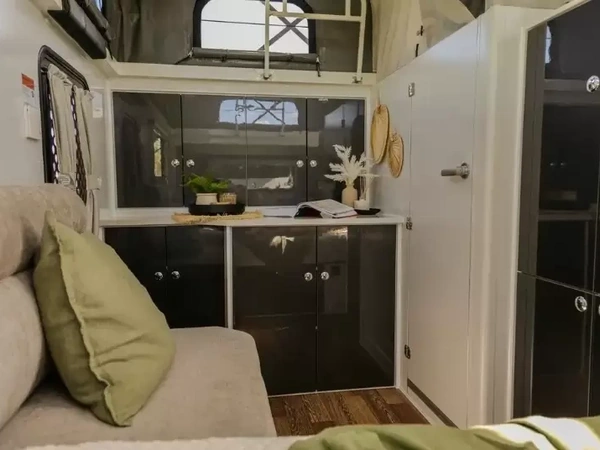
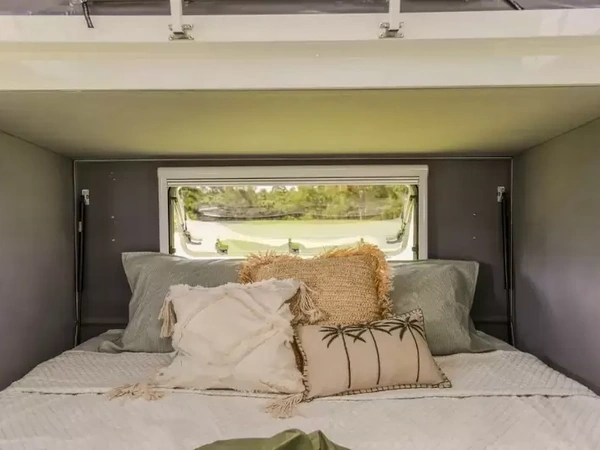
In case this is your first time towing, these two listings will help you compare caravans within a lower ATM filter; confirm their individual weights and your vehicle’s towing capacity.


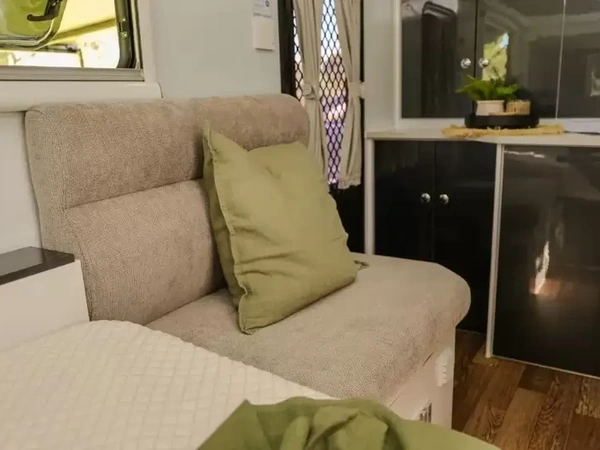
 2,000 Kg
Essential Caravan Towing Equipment and Hitching Checks
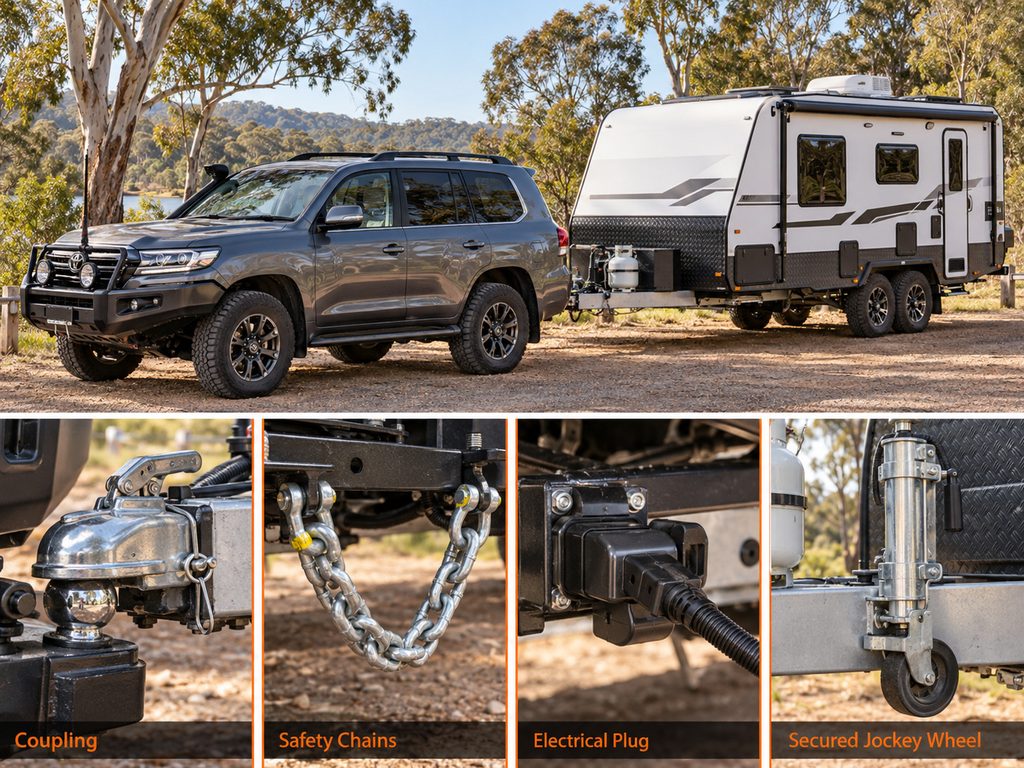
Connecting your caravan correctly is an important part of preparing for a journey.
When hitching up, take your time.
Don’t guess whether a component is properly secured if you’re unsure. Consult the relevant manufacturer instructions.
Towbar, coupling, safety chains and electrical connections
A typical hitching process involves:
- Position the towing vehicle.As you reverse, ensure that the towball or approved hitch is aligned with the caravan coupling correctly.
- Couple the coupling.Install the caravan on the hitch and engage the locking mechanism in accordance with the manufacturer’s instructions.
- You need to confirm the connection.Make sure the caravan is properly attached by using the coupling’s recommended checking procedure.
- Be sure to attach the safety chains.Following the applicable requirements, attach the correct number and type of chains to the designated attachment points.
- It is time to connect the electrics.Connect the trailer’s electrical connector and ensure the caravan’s lights and electrical braking system are working correctly.
- You should secure the jockey wheel.If necessary, raise it fully or remove it completely, making sure it is locked in its travelling position.
- Do a walk-around.It is important to check the hitch, connections, and surrounding area before moving a vehicle.
Check and connect the breakaway cable or system according to its instructions when fitted.
It’s not recommended to attach safety chains to an unsuitable part of the towbar, or to assume all hitch designs use the same connection method.
Towing mirrors, brakes and breakaway systems
Towing mirrors allow you to monitor traffic beside and behind a wide caravan.Fit suitable extensions where necessary to your mirrors so that they provide the legally required field of view.
The caravan brakes must be appropriate for the caravan’s mass and meet applicable requirements.Some caravans use electric brakes controlled by the towing vehicle, but other systems work differently.
Breakaway systems apply the caravan’s brakes if it becomes detached from the tow vehicle. These systems are required for certain heavier trailers. The NSW Government’s towing requirements explain the braking and breakaway requirements for different trailer masses.
Before setting off, make sure the braking system is connected, working properly and adjusted according to the manufacturer’s instructions. If you’re buying a second-hand caravan, remember to inspect the braking equipment and hitch before making a purchase.
Check the caravan’s tyres for correct inflation, overall condition and signs of damage. Don’t forget to inspect the spare tyre as well. Our caravan inspection checklist covers other routine checks worth completing before your trip.
How to Tow a Caravan Safely on Australian Roads
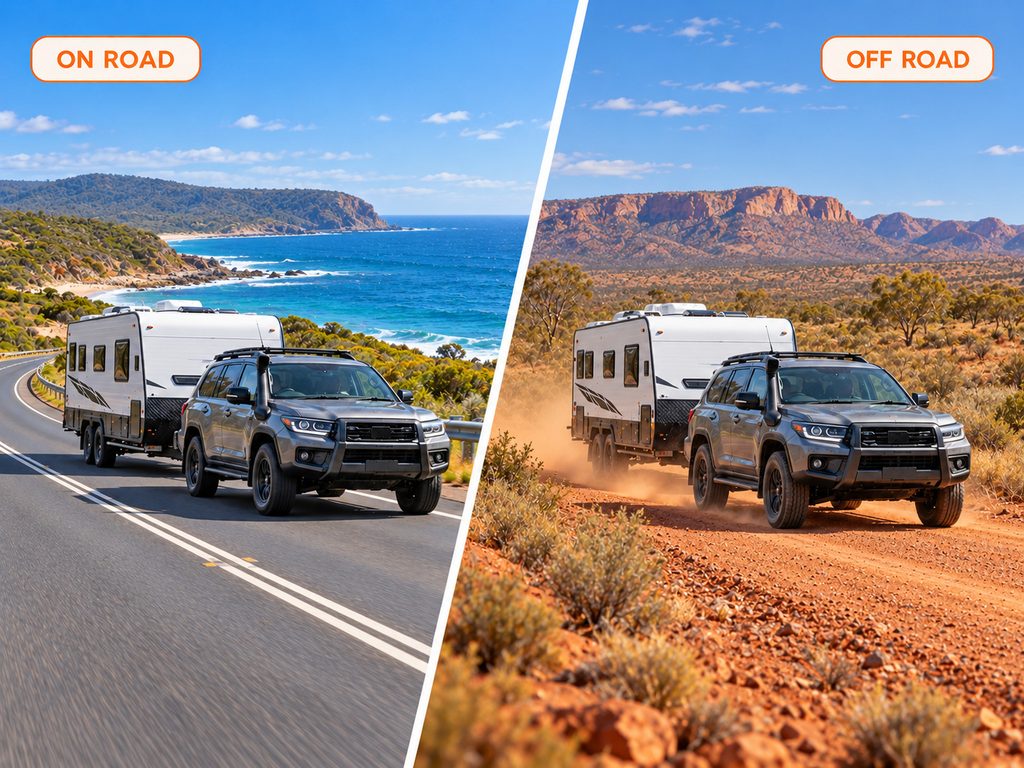
Keeping your driving smooth and predictable is one of the most effective ways to reduce your risk on the road.
The towing of a caravan requires patience.Make sure you allow more travel time than you would without a trailer.See our caravan guide for help planning your first trip.
Speed, following distance and overtaking
Make sure you choose a speed that is both legal and appropriate for the conditions.
Towing speed limits vary across Australian states and territories. In Western Australia, for example, Western Australia’s towing rules limit vehicles towing caravans or trailers to 100 km/h, even when the posted speed limit is higher. NSW also has additional restrictions for certain heavier vehicles and combinations.
Be sure to check the requirements in the jurisdictions you’ll be travelling through.Also, the vehicle or caravan manufacturer’s instructions may impose limits.
When towing:
- Keep a larger distance from the vehicle ahead than you normally would.
- To anticipate hazards, look further down the road.
- When approaching intersections, bends, and traffic, start slowing up earlier.
- Before overtaking, allow considerably more time and clear road space.
- Avoid sudden lane changes.
- Pass faster vehicles when you can safely and legally do so.
When traffic builds behind you on a narrow road, use a safe stopping area.Make sure you don’t stop abruptly or pull onto an unsafe shoulder.
Driving in wind, rain and on uneven roads
The caravan presents a large surface area to the wind.Passing trucks and strong crosswinds can create turbulence that affects how the combination behaves.
In challenging conditions:
- Reduce speed smoothly when appropriate.
- Keep both hands on the steering wheel.
- Avoid sudden steering corrections.
- Increase your following distance on wet or slippery roads.
- Watch for potholes, uneven surfaces and changes in road conditions.
- Consider delaying travel when severe weather makes towing unsafe.
Whenever you are driving downhill, use an appropriate lower gear or engine-braking technique as recommended by your vehicle manufacturer.Refrain from relying on prolonged heavy braking.
Make sure you take regular rest breaks, especially on long journeys.The act of towing requires more concentration than ordinary driving.Use off-road caravans to explore different caravan designs, then confirm the manufacturer’s road-use restrictions if you plan to travel beyond sealed roads.
Braking, Cornering and Managing Caravan Sway
Cornering and braking are closely connected to caravan stability.You can make your travels more comfortable and predictable by learning smooth control techniques.
Smooth braking and cornering techniques
If you are approaching a bend, reduce your speed before entering it rather than braking suddenly.
Remember that your caravan may track inside the path that your tow vehicle takes.The importance of this is especially important near kerbs, roundabouts, service stations, and narrow intersections.
Keep steering inputs gentle and avoid sudden changes in direction.
If you are braking, slow down earlier than usual and apply the brakes progressively.Stopping distance is determined by the combined weight, road surface, speed, braking equipment, and other factors.
What to do if your caravan begins to sway
A caravan could become dangerous if its side-to-side motion increases.
There are several possible contributing factors, including excessive speed, unsuitable loading, incorrect towball download, strong winds, and an improperly matched or maintained towing combination.
To help prevent sway:
- You should keep your vehicle and caravan within their rated limits.
- During travel, secure luggage so that it cannot move.
- Load placement and towball download should follow manufacturer guidelines.
- Make sure the caravan’s suspension, brakes, and hitch are in good condition.
- Adapt your speed to the weather, traffic, and road conditions.
- During significant sway, avoid abrupt steering or braking inputs.
Make sure you keep control of the steering and follow the emergency guidance provided by your vehicle or trailer’s braking system and stability equipment.
It is possible with some braking systems to control the trailer brakes independently of the tow vehicle.It depends on the equipment and circumstances whether this is appropriate.
In the event that the combination becomes unstable, focus on maintaining control rather than making sudden corrections.Stop once it’s safe to do so, inspect the loading, tyres, hitch, and towing setup before continuing.If you cannot identify the cause, seek professional assistance.
When it comes to towing, different combinations behave differently, so it’s important to read the manufacturer’s specific advice before making your first trip.
How to Reverse a Caravan
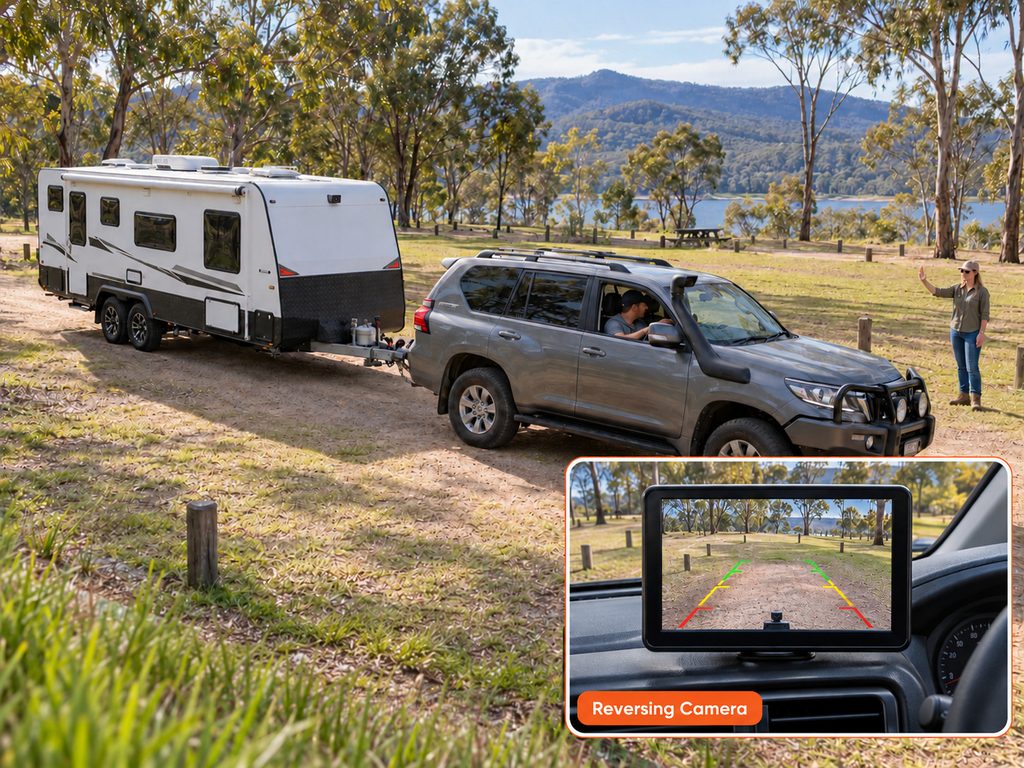
It is often one of the most challenging skills for first-time caravan drivers to reverse.
Give yourself plenty of room, go slowly, and make small steering adjustments.
Beginner reversing techniques
You should practice in a clear, level area away from traffic and pedestrians.A caravan size guide will help you understand how different layouts and lengths may affect manoeuvrability.
Try the following approach:
- Before moving, inspect the entire area and identify obstacles.
- Ensure that the tow vehicle and caravan are as straight as possible.
- Reverse very slowly.
- Try small steering adjustments and see how the caravan responds.
- As the caravan moves towards the desired position, gradually straighten the tow vehicle.
- Pull forward and stop if the angle becomes difficult to control.
When you reverse, the caravan initially responds in the opposite direction to the rear of the tow vehicle.
Make sure the caravan doesn’t turn too sharply relative to the vehicle.It can result in a jackknife situation and damage the combination.
Using a spotter safely
A second person can assist with reversing into a campsite, driveway, or narrow parking space.
Decide on clear hand signals or another reliable communication method before starting.
If possible, the spotter should keep well away from the caravan’s path and any possible pinch points.
If you lose sight of the spotter or are unsure about their instructions, stop immediately.
You should never rely solely on cameras or sensors.While they can be helpful, they don’t replace checking your surroundings.
Common Caravan Towing Mistakes to Avoid
There are many beginner towing mistakes that occur before the journey begins.
The following are some of the most important things to avoid:
Firstly,Assuming you can tow any caravan with your vehicle
The advertised towing capacity of a tow vehicle is only one factor in determining how suitable a combination is.
2. Forgetting to check the hitch
The improperly secured coupling, disconnected electrical plug, or unsecured jockey wheel can all pose serious safety hazards.
3. Carrying too much weight
Water tanks, camping equipment, luggage, and accessories can quickly increase the load mass.If you have limited towing capacity, compare caravans under 3,000kg ATM and verify the actual payload capacity.
4. Loading the caravan poorly
The weight of an item placed too far toward the rear or unsecured items that move during transit can negatively affect stability.If you are comparing family caravans, think about how the storage layout will affect the load distribution once you have packed for your trip.
5. Driving too quickly for the conditions
Driving too fast for the conditionsTowing speeds are not always safe, particularly in wind, rain, or on winding roads.
6. Following too closely
The towing combination must have more room to stop and respond to traffic changes.
7. Skipping reversing practice
The first time you attempt a tight campsite maneuver after a long drive can make an already stressful situation worse.
8. Ignoring tyre and brake maintenance
On a long journey, problems with caravan tyres, wheel bearings, or brakes can become serious.While researching lightweight caravans, buyers should still check the tyre, brake and load ratings rather than assuming lower weight means fewer dangers.
Using a simple routine of checking, preparing, and practicing helps reduce these risks.
Consider these two touring listings when choosing a caravan for regular highway holidays. Check their towing weights, brakes, and hitch specifications.

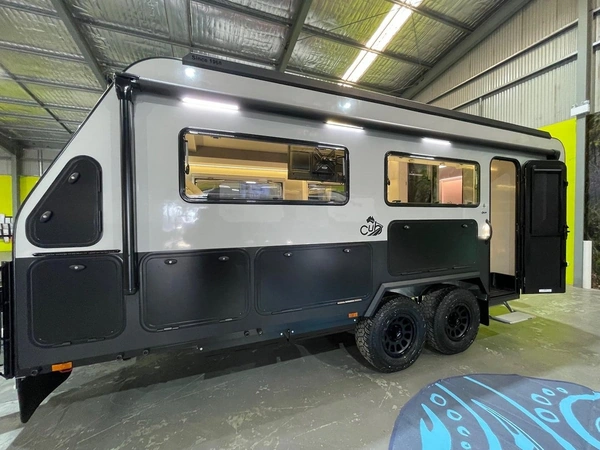
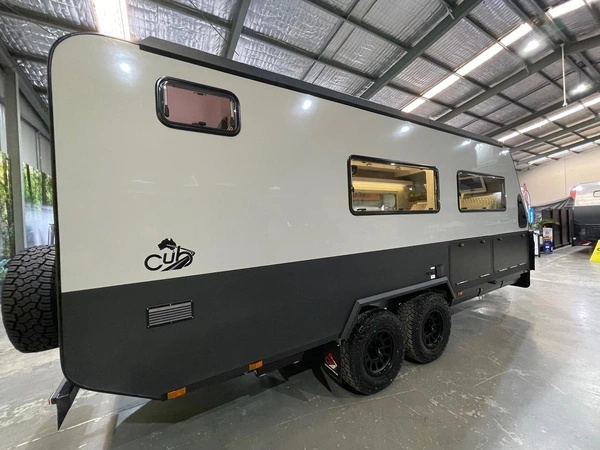
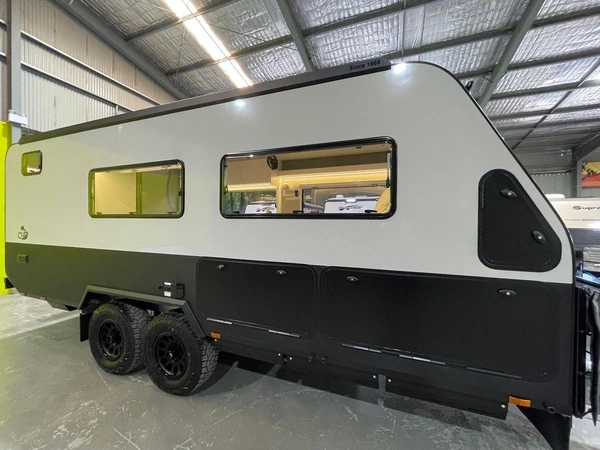
 18 ft (5.5m)
Pre-Departure Caravan Towing Checklist
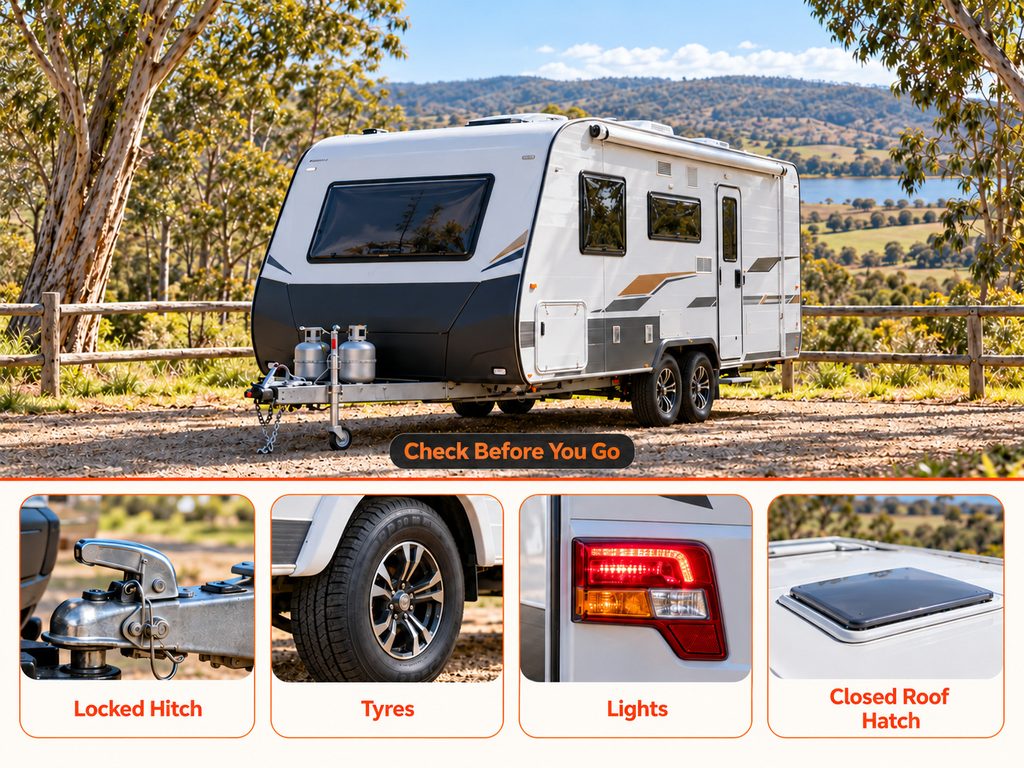
Check this checklist before every towing trip.In addition to the owner’s manual, check your setup for any additional procedures.The South Australian Government’s caravan towing safety tips provide practical pre-trip and on-road checks as well.Before leaving home for the first time, it is especially useful to practice the sequence.
Tow vehicle and caravan
- Make sure the caravan and loaded vehicle are within all applicable mass limits.
- On both the vehicle and caravan, check the tyre pressure and condition.
- You must inspect the caravan’s wheels, brakes, and visible suspension components.
- You should also check the tow vehicle’s fluid levels and general roadworthiness.
- Ensure that luggage and equipment are secured.
Hitch and connections
- Ascertain that the coupling is correctly seated and locked.
- The safety chains should be attached to the correct points.
- Check the taillights, brake lights, and indicators.
- If applicable, check the trailer’s braking system and breakaway equipment.
- Raise and secure the jockey wheel completely.
- Verify that the towing mirrors are correctly positioned.
Caravan exterior and interior
- Close all the doors, windows, roof hatches, and storage compartments.
- Assemble and secure stabiliser legs and corner steadies.
- Keep loose belongings inside the caravan.
- Make sure all gas appliances, cylinders, and valves are in the appropriate condition to be moved.
- Ensure water hoses, power leads, and leveling equipment are disconnected and stored.
- Make sure the caravan’s registration and number plate are current and visible.
Before moving off
- When the caravan is ready to move, remove the wheel chocks.
- The caravan parking brake should only be released when the combination is ready to depart.
- Make sure the area around and beneath the caravan is clear.
- Make sure the route is suitable for the combination’s height, width, length, and weight.
After setting off, it’s also good practice to stop somewhere safe and check the hitch, tyres, and external fittings.
Share this article
Frequently asked questions (FAQs)

Ready to Find Your Dream Caravan?
Explore thousands of caravans for sale across Australia and start your journey in style.
Browse CaravansReady to Buy or Sell a Caravan?
Looking to buy? Browse caravans for sale from dealers and private sellers across Australia, with listings available by make, model, price, location and caravan type.
Ready to sell? Visit Sell My Caravan to advertise your caravan for just $49 incl. GST. Your listing stays live until sold, helping you connect with potential caravan buyers across Australia.
Explore Other Travel Options
Still deciding which travel setup suits you? Browse motorhomes for sale for a vehicle with integrated living space, or explore campervans for sale for a more compact option. For a towable camping setup, compare camper trailers for sale across our other marketplaces.